
Tinnitus Explained: Causes, Symptoms, and Treatment Options (Ringing in Ears)
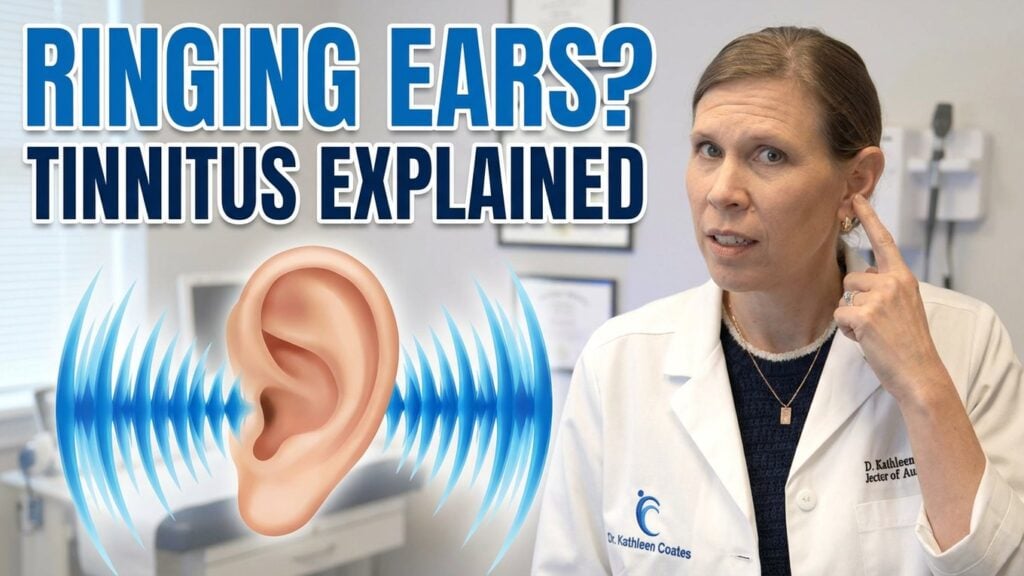
If you’ve been hearing ringing, buzzing, whooshing, or other sounds that no one else seems to hear, you’re not alone.
An estimated 50 million Americans and nearly 450 million people worldwide experience tinnitus. Yet despite how common it is, one of the biggest misconceptions we hear at Coates Hearing Clinic is:
“There’s nothing that can be done about tinnitus.”
The truth is, that’s simply not the case.
While tinnitus doesn’t have one universal cure, there are many effective treatment options available. The key is understanding what’s causing your symptoms so the right treatment plan can be created for you.
What Is Tinnitus?
Tinnitus is the perception of sound without an external source.
Although many people describe it as ringing in the ears, tinnitus is actually an umbrella term that can include sounds such as:
- Ringing
- Buzzing
- Crickets
- Whooshing
- Pulsing
- Humming
Some people hear it in one ear, while others notice it in both ears or feel like the sound is coming from somewhere inside their head.
Many patients first notice tinnitus at night or in quiet rooms because there are fewer outside sounds competing for the brain’s attention.
What Causes Tinnitus?
One of the first questions patients ask is, “Why is this happening?”
The answer is that tinnitus can have many different causes.
In fact, about 90% of tinnitus cases are associated with some degree of hearing loss or damage to the inner ear.
As hearing gradually changes over time, the brain receives less auditory input. In response, it may begin creating its own internal sound, which is experienced as tinnitus.
However, hearing loss isn’t the only possible cause.
Other conditions that can contribute to tinnitus include:
- Earwax buildup
- Fluid behind the eardrum
- Sinus congestion or allergies
- Jaw (TMJ) disorders
- Certain medications
- Thyroid disorders
- Heart conditions
- Kidney disease
Because there are so many possible causes, a thorough evaluation is essential.
How Is Tinnitus Evaluated?
At Coates Hearing Clinic, every tinnitus evaluation begins with identifying the underlying cause.
The first step is examining the ears to rule out simple, treatable issues such as wax buildup, pressure, or fluid.
If no blockage is found, we’ll perform a comprehensive hearing evaluation in our sound-treated booth to determine whether hearing loss is contributing to your symptoms.
We’ll also review your medical history, medications, lifestyle, and symptoms to build a complete picture of your hearing health.
Our goal isn’t simply to confirm that you have tinnitus—it’s to understand why you have it.
Can Hearing Aids Help Tinnitus?
For patients with hearing loss, the answer is often yes.
Research has shown that properly fitted prescription hearing aids are one of the most effective ways to manage tinnitus when hearing loss is present.
Many people assume hearing aids only make sounds louder.
In reality, they’re carefully programmed to restore the specific sounds your brain is missing.
When those missing sounds return, the brain has more meaningful external input to focus on, which can reduce the prominence of tinnitus for many patients.
Rather than constantly “listening” to internal noise, the brain is once again stimulated by the sounds of everyday life.
Tinnitus Treatment Is Personalized
Because tinnitus has many possible causes, treatment is never one-size-fits-all.
Depending on your evaluation, your personalized treatment plan may include:
- Prescription hearing aids
- Tinnitus education and counseling
- Sound therapy
- FDA-approved treatment options
- Experimental therapies when appropriate
- Ongoing monitoring and follow-up care
For patients whose tinnitus has multiple contributing factors, we often coordinate care with other healthcare providers.
This may include:
- Dentists or TMJ specialists
- Physical therapists
- Primary care physicians
- ENTs
- Mental health professionals for cognitive behavioral therapy (CBT)
By addressing every contributing factor, we can create the most effective long-term treatment plan possible.
Dr. Coates’ Personal Connection to Tinnitus
For Dr. Coates, tinnitus isn’t just something she treats—it’s something she personally understands.
While studying audiology at The Ohio State University, she discovered she had high-frequency hearing loss in her left ear, along with tinnitus.
That experience ultimately strengthened her passion for helping patients find answers and reassurance.
She understands firsthand how frustrating tinnitus can be—and how encouraging it is to learn that treatment options do exist.
You Don’t Have to Live With Tinnitus Alone
One of the most important messages we want every patient to hear is this:
You don’t have to simply “live with it.”
While tinnitus management often takes time, today’s diagnostic tools and treatment options offer more hope than ever before.
The sooner you seek an evaluation, the sooner you can begin identifying the cause and developing a plan that’s tailored specifically to you.
Schedule Your Tinnitus Evaluation
If you’re experiencing ringing, buzzing, pulsing, or other sounds in your ears, don’t wait for them to become more disruptive.
At Coates Hearing Clinic, our experienced audiologists will help identify the cause of your tinnitus and create a personalized treatment plan designed to help you hear—and live—more comfortably.
Better hearing starts with one conversation.
Contact Coates Hearing Clinic today to schedule your comprehensive tinnitus evaluation and take the first step toward finding answers.
