
Hearing Aids Explained: Over-The-Counter vs Prescription vs Amplifiers (What You Need to Know)
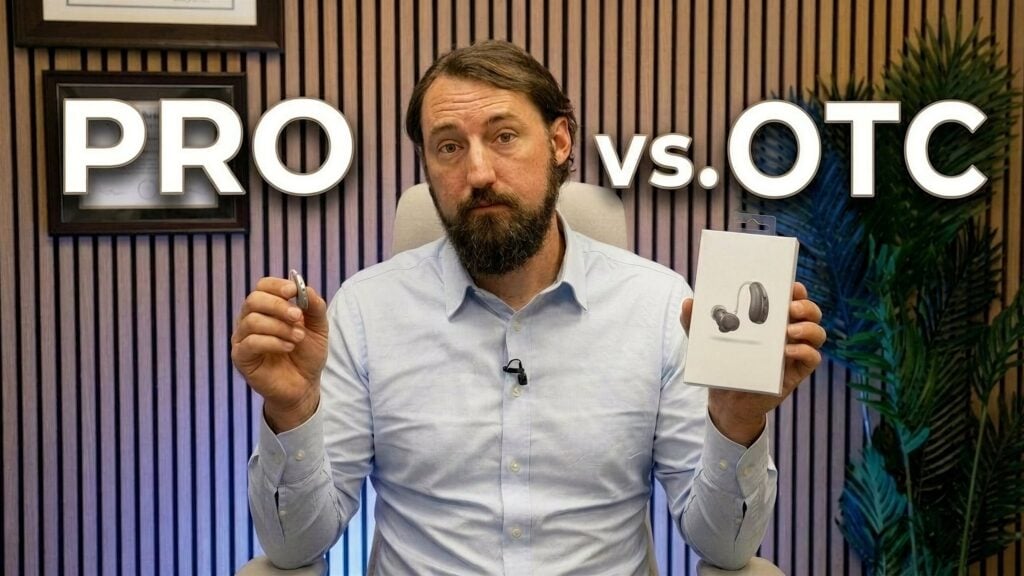
If you’ve started noticing changes in your hearing, you’ve probably seen the growing number of options available—especially over-the-counter (OTC) hearing aids.
They’re easy to find, relatively affordable, and don’t require a prescription.
So the question becomes: Do you really need to see an audiologist, or can you just buy something off the shelf?
At Coates Hearing Clinic, we hear this every day. And the honest answer is: It depends on your hearing, and most people don’t know what that actually is yet.
Why Guessing Your Hearing Loss Doesn’t Work
One of the biggest challenges with hearing loss is this:
You can’t accurately measure it on your own.
In fact, studies show that about 80% of people underestimate their hearing loss, and many wait 7 to 10 years before getting tested.
During that time, it’s common to:
- Turn the TV up louder
- Struggle more in conversations
- Feel like people are mumbling
So when people finally take action, they often start with OTC hearing aids, thinking their hearing loss is mild. And while they may notice some improvement, they’re often missing out on what’s actually possible with the right solution.
What Are OTC Hearing Aids?
Over-the-counter hearing aids were introduced as an FDA-regulated category in 2021.
They are designed for:
- Adults with mild to moderate hearing loss
- People who want a more accessible, lower-cost option
Typically, OTC devices:
- Cost between $600 to $1,200 per set
- Are self-fitted (you adjust them yourself)
- Amplify sound in a general way
For some people, they can be a helpful starting point. But, they are not personalized to your specific hearing needs.
What Are Prescription Hearing Aids?
Prescription hearing aids are fitted and programmed by a licensed audiologist based on your hearing test (audiogram).
Instead of making everything louder, they:
- Target only the frequencies you struggle to hear
- Preserve sounds you already hear well
- Adjust based on your environment and lifestyle
This means clearer conversations instead of louder noise.
We take it a step further by using real-ear measurements to ensure your devices are calibrated specifically to your ear canal and hearing profile.
Amplifiers vs Hearing Aids: What’s the Difference?
You may also come across basic amplifiers which are often sold online or in retail stores.
These devices:
- Simply make all sounds louder
- Do not differentiate between speech and background noise
- Are not designed to treat hearing loss
While they’re typically lower in cost (around $100), they’re not a substitute for proper hearing care.
Why Personalization Matters More Than You Think
Two people can have the same hearing loss on paper and still need completely different solutions. Why?
Because hearing isn’t just about your ears, it’s about:
- Your daily environments (quiet vs noisy)
- Your communication needs
- Your ear anatomy
Without personalization, even a good device can fall short.
That’s one of the main reasons OTC devices have higher return rates.
They don’t adapt to the individual.
Let’s Talk About Cost (It Matters)
We understand that cost is one of the biggest concerns when it comes to hearing care.
Here’s what many people don’t realize:
- About 70% of patients have some level of insurance benefit or discount
- Pricing can vary widely depending on where you go
- Some retail quotes can reach $10,000–$12,000
Our clinic’s private-pay pricing has remained consistent since 2019, and we offer a price match program to ensure 100% that you’re not overpaying.
We don’t want to just improve your hearing, we want to make sure it’s accessible and transparent for you.
So, What’s the Right Choice for You?
There’s no one-size-fits-all answer. But here’s where to start:
Step 1: Get a hearing test.
Even if you’re not sure you have hearing loss, a baseline test gives you clarity and something to compare against over time.
From there, you can make an informed decision about:
- Whether OTC devices are enough
- Or if a personalized solution will give you better results
Ready to Take the First Step?
Better hearing starts with understanding what’s really going on, and we’re here for you every step of the way.
👉 Schedule your appointment today: https://coateshearing.com/contact-us/
