
Hearing Aids Q&A: Cost, Insurance, OTC vs Prescription & More
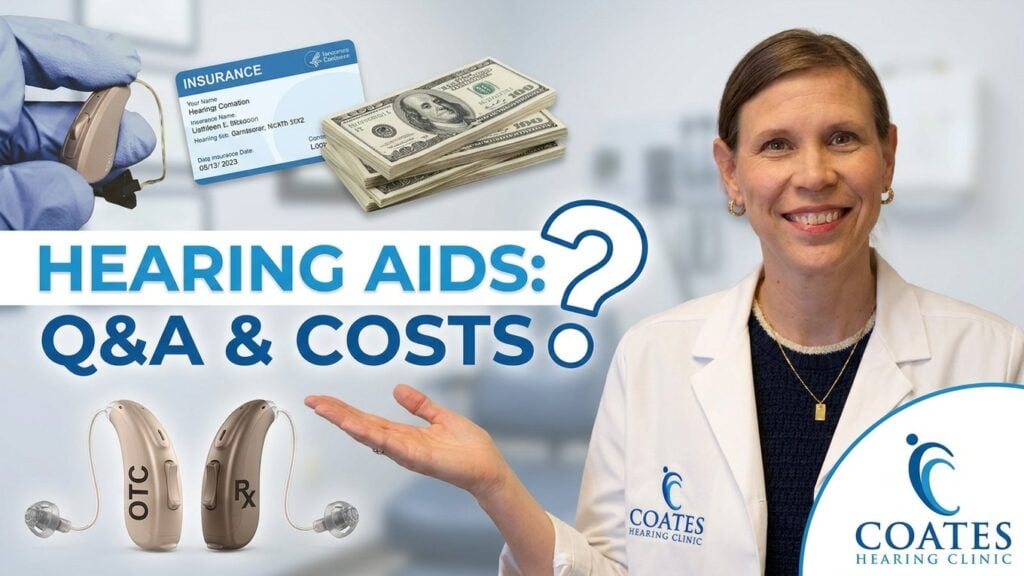
If you’ve started noticing signs of hearing loss, you’ve probably wondered:
“Should I try over-the-counter hearing aids first?”
It’s one of the most common questions we hear at Coates Hearing Clinic.
With hearing aids now available in retail stores and online, many people assume all hearing aids work the same way. The reality is that over-the-counter (OTC) hearing aids and prescription hearing aids are designed very differently, and understanding those differences can help you choose the option that’s right for your hearing.
Why So Many People Delay Treatment
On average, people wait seven to ten years before seeking help for hearing loss.
Often, it’s not because they don’t notice a problem. It’s because they’re unsure where to start or they’re hesitant to ask questions.
Many people worry about:
- Whether they actually have hearing loss
- Whether hearing aids will help
- What hearing aids look like today
- How much they cost
- Whether insurance covers them
Our goal is to answer those questions so you can make an informed decision about your hearing health.
How Prescription Hearing Aids Work
Prescription hearing aids are customized specifically for you.
Before they’re ever programmed, you’ll receive a comprehensive hearing evaluation that measures:
- Which frequencies you’re struggling to hear
- How severe your hearing loss is
- How well you understand speech
- How you perform in background noise
Using those results, a doctor of audiology programs your hearing aids to provide the exact amount of amplification needed at each pitch or frequency.
Instead of simply making everything louder, prescription hearing aids help restore the sounds you’ve been missing while improving speech clarity in everyday situations.
Why Turning Up the Volume Isn’t Enough
One of the biggest misconceptions about hearing loss is that it’s simply a volume problem.
For most people, it isn’t.
Many patients tell us:
“I can hear people talking—I just can’t understand what they’re saying.”
That’s because hearing loss often affects clarity, especially in places like:
- Restaurants
- Family gatherings
- Church
- Social events
- Meetings
Prescription hearing aids are designed to automatically process sound based on your hearing needs, helping conversations sound clearer instead of simply louder.
Over-the-Counter Hearing Aids vs. Prescription Hearing Aids
Over-the-counter hearing aids were created to increase access for adults with mild to moderate hearing loss.
For some individuals, they may provide enough improvement.
However, OTC devices are not customized using your hearing test results.
That means they cannot account for:
- Your unique hearing loss pattern
- Speech understanding difficulties
- Different hearing levels at different frequencies
- Real-world listening challenges
Prescription hearing aids, on the other hand, are professionally:
- Programmed
- Calibrated
- Verified
- Fine-tuned over time
The goal is simple:
Put them on in the morning—and forget you’re wearing them.
Modern Hearing Aids Have Changed
Many people still picture hearing aids as large, bulky devices from decades ago.
Today’s technology looks very different.
Modern hearing aids are:
- Smaller and more discreet
- Comfortable to wear
- Automatically adjust to different environments
- Designed to improve speech understanding
- Capable of connecting with phones and other technology
Perhaps most importantly, wearing technology in your ears has become completely normal.
Between wireless earbuds and Bluetooth devices, hearing aids no longer stand out the way they once did.
In many cases, patients tell us they’re far less embarrassed wearing hearing aids than constantly asking people to repeat themselves.
Are Hearing Aids Covered by Insurance?
Another common misconception is that hearing aids are never covered by insurance.
In reality, many insurance plans now provide hearing aid benefits.
At Coates Hearing Clinic, we verify insurance coverage for every scheduled patient before their appointment so we can review available benefits together.
Our team also helps patients explore all available financial options before making any treatment decisions.
Making Better Hearing More Affordable
Cost should never prevent someone from getting the care they need.
That’s why Coates Hearing Clinic works to make treatment as accessible as possible through:
- Most major insurance plans
- Flexible financing options
- State assistance programs
- Partnerships with nonprofit organizations
- Our own nonprofit hearing aid assistance program
Our goal is to help every patient find a path toward better hearing.
The Best Hearing Aid Is the One That’s Right for You
No two people experience hearing loss the same way.
That’s why hearing care shouldn’t be one-size-fits-all.
Whether you’re considering over-the-counter hearing aids or wondering if prescription hearing aids are right for you, the best first step is a comprehensive hearing evaluation.
Once we understand your hearing, we can help you understand your options.
Schedule Your Hearing Evaluation
If you’ve been struggling to hear conversations, asking people to repeat themselves, or wondering whether hearing aids could help, we’re here to answer your questions.
At Coates Hearing Clinic, our experienced audiologists provide personalized hearing evaluations, customized treatment recommendations, and ongoing support so you can hear more clearly and stay connected to the people and moments that matter most.
Better hearing starts with one conversation.
Schedule your hearing evaluation today and let us help you find the solution that’s right for you.
